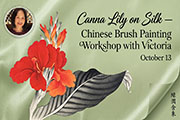
Canna Lily on Silk — Gongbi Painting Workshop with Victoria
Date: Tuesday, October 13 | Time: 9:00 AM – 12:30 PM (Pacific time )
About the class
The canna lily is known in Chinese as the "beauty flower," a name it earned from classical poetry — a Tang-dynasty poet, sitting alone in his garden pavilion, described the green cassia tree as his honored guest and the red canna as his beautiful companion. The name stayed with the flower, and for the next thousand years painters and poets treated it as a graceful figure in red: elegant, warm, and quietly confident. Its scarlet blooms came to stand for passion, vitality, and good fortune, while its habit of flowering late in the season made it a symbol of enduring beauty — a flower that holds its color after others have faded.
Our class title comes from a Tang verse on the red canna that captures the plant in a single phrase: moist green cradling crimson light. That is exactly what we will paint — luminous scarlet petals held within broad, rain-dark leaves.
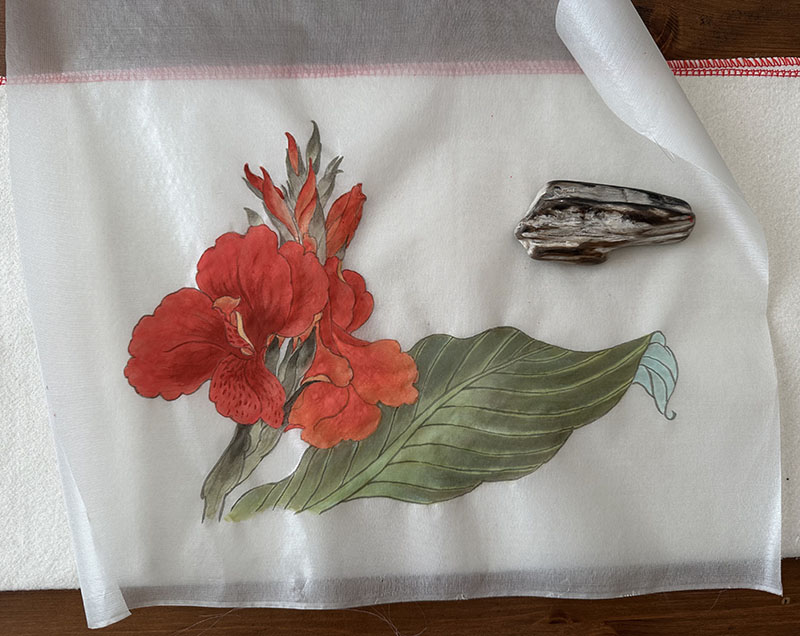
In this half-day workshop Victoria will guide you through a complete canna lily composition on silk, using wet-into-wet color washes. You will learn how to build the deep, transparent reds of the blossoms, how to model the sweeping leaf with graded ink so its ribs and curl read clearly, and how to keep the image fresh and glowing rather than heavy. The wet-into-wet method is the heart of the lesson: how much water the surface can hold, when to charge a second color into a damp wash, and when to stop. These are skills that carry into every subject you paint afterward.
Our master model
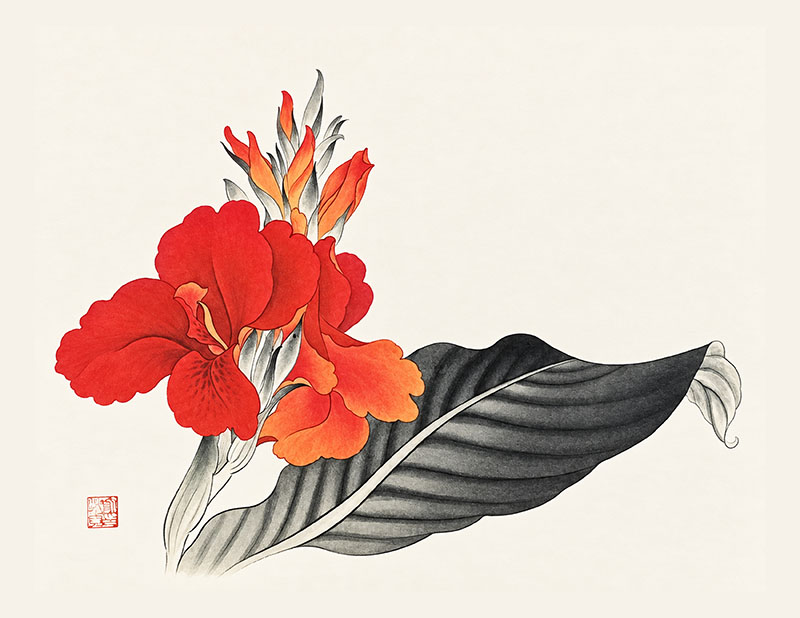
We will study a canna lily painting by Yu Chizhen (俞致貞, 1915–1995), one of the twentieth century's greatest gongbi flower-and-bird painters. Born in Beijing to a family of imperial court physicians, she became a disciple of Yu Fei'an at nineteen, then spent eight years in the National Painting Research Institute at the Palace Museum copying Song and Yuan masterworks, and later studied under Zhang Daqian in his Dafengtang studio. The painter Li Keran called her "the leading woman of contemporary gongbi flower-and-bird painting". She taught for decades at the Central Academy of Fine Arts and the Central Academy of Arts and Design, and she also researched and made her own traditional Chinese pigments — which is why her reds remain so pure.tsinghua.edu+1
Her canna lily shows everything this class is about: flame-red petals of perfect clarity, a bold ink leaf with sculpted ribs, and a composition that leaves generous empty space. We will use it as our model while learning the techniques that make it possible.
The inscription
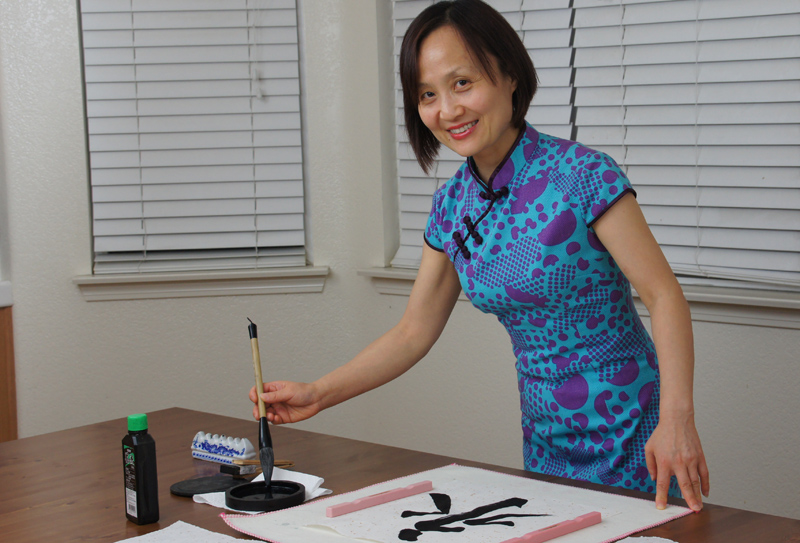
Every finished painting needs its inscription. Victoria will teach you to write the four-character title 綠潤含朱 — moist green cradling crimson — and demonstrate it in four scripts so you can choose the one that suits your painting:
Standard script (kaishu) — clear and upright, the best starting point
Clerical script (lishu) — broad and archaic, with its distinctive flared strokes
Semi-cursive script (xingshu) — flowing and natural, the most widely used for inscriptions
Cursive script (caoshu) — free and expressive, for a bold finish
You will practice all four on paper before committing one to your painting.
Level: Suitable for students with some brush-painting experience; beginners are welcome with a willingness to work slowly and carefully.
Materials
Supplies List
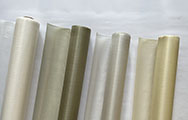
Silk or paper — Victoria will demonstrate on 11"x14" 3-thread silk. Students may use any of the following:
- 3-thread silk — recommended, any color you like. Victoria will demonstrate on 3-thread silk, so that is the best choice if you want to follow along exactly.
- 6-thread sized silk — also works well
- Sized paper (熟紙) — sized xuan, or cicada-wing xuan. Alternatively, you may use hot press watercolor paper or mix media paper.
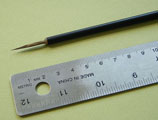
Brushes: the Basic 3 brush set, plus a Shuxu (rat-whisker) hair outlining brush or a mini liner
Colors: Chinese painting pigments — Marie's 12-color set
A note on colors — please read carefully
If you paint on silk, use traditional Chinese paints with gelatin (glue) binding. This lesson relies on wet-into-wet washing. Chinese pigments contain a higher proportion of glue binder, which anchors the color and keeps it from creeping, bleeding, or smearing into the surrounding silk. Watercolors and other low-binder paints tend to run when re-wetted and will turn the crimson petals blurry. Victoria will provide Marie's Chinese painting color codes in her class handout. If you paint on paper, your usual watercolors are fine.
Also bring
- Chinese or Japanese sumi ink
- Ink stone or palette dish, plus several small color dishes
- Two water containers — one clean for washes, one for rinsing
- Paper towels and a felt pad
- Practice paper for the calligraphy portion
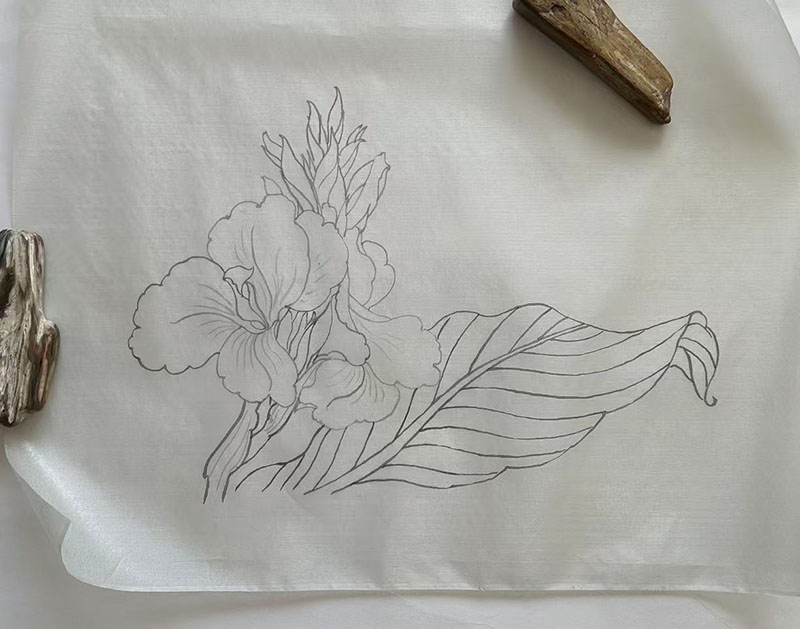
- LED light Box for tracing (optional)